Your Guide to Smarter Category Management Software (And the Tools to Get You There)
Do you still rely on spreadsheets and guesswork to manage your category strategies? You are not alone. In today's fast-moving procurement landscape, traditional approaches to category management are struggling to keep pace. Procurement professionals are contending with an increasing volume of information, a growing number of stakeholders, and rising pressure to deliver strategic value.
Common frustrations include time-consuming manual data entry, inconsistent or inaccurate forecasting, disconnected digital tools, and the absence of real-time insights. These limitations lead to reactive rather than strategic decision-making. In contrast, modern category management tools are designed to address precisely these challenges. By digitizing workflows, integrating data, and embedding strategic processes, category management software provides the foundation for a more structured, consistent, and value-driven category management strategy.
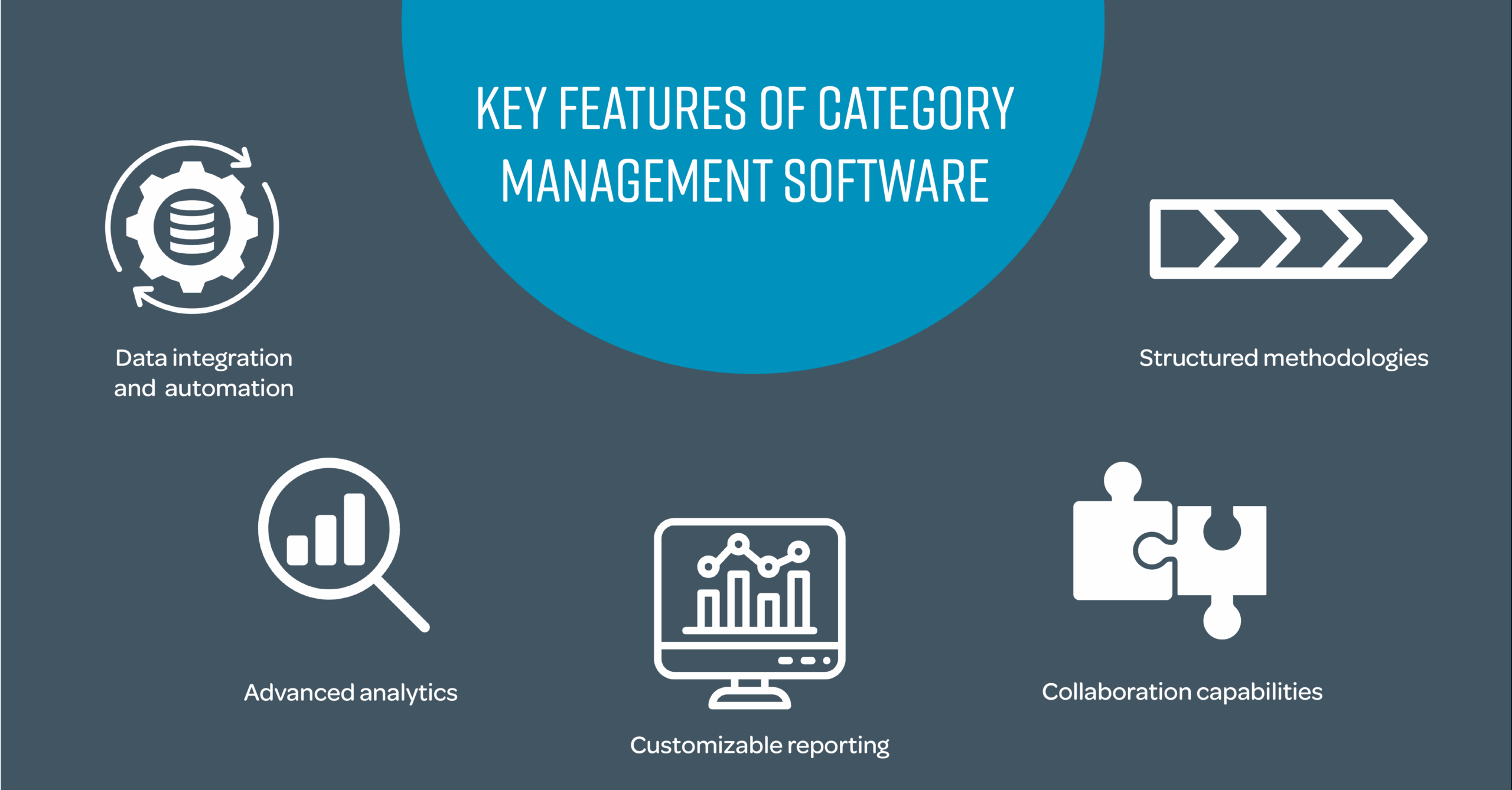
Key Features to Look for in Category Management Software
If you are considering investing in category management software, it is important to understand which features genuinely add strategic value. The following capabilities form the baseline of any effective category management platform:
Data Integration and Automation
Accurate and validated data is at the core of any successful digital procurement environment. Category management tools should connect with your existing systems, such as ERP, spend analytics, supplier databases, and contract repositories, to pull live, trusted data into a centralized workspace. This ensures all stakeholders are working from the same source of truth and removes the need for duplicate data entry.
Advanced Analytics
Robust analytics capabilities are essential for any modern category management software. Look for tools that allow you to analyze historical spend, forecast demand, assess supplier performance, and identify opportunities and risks. Some platforms also incorporate machine learning algorithms to generate predictive insights, helping you to plan more effectively.
While artificial intelligence (AI) can be a useful accelerant, it should support - not replace - the human expertise that underpins an effective category strategy.
Structured Workflow Frameworks
Strong category management tools embed a structured methodology directly into the platform. Frameworks such as Positive Purchasing's 5i® category management methodology (Initiation, Insight, Innovation, Implementation, Improvement) offer a step-by-step guide for building and executing strategies in a repeatable, scalable way.
Embedding this structure within the software ensures consistency across teams, reduces reliance on individuals, and helps newer team members contribute more effectively.
Collaboration Tools
Category management is a cross-functional discipline. Your software should facilitate input from multiple stakeholders, including procurement, finance, operations, and where appropriate, your suppliers. Collaboration features might include shared workspaces, permission-based access, in-app commenting, or embedded communication threads. These features reduce siloed working and enhance alignment across the business.
Reporting and Dashboards
Effective category management platforms provide dashboards that can be tailored to different user roles and objectives. Whether you are tracking savings, risk metrics, or monitoring governance, the ability to build and customize real-time visual reports is essential. Dashboards should be configurable to reflect business-specific KPIs and offer drill-down capabilities for deeper analysis.
What Problems Does Category Management Software Solve?
Category management software offers more than simply a digitized version of existing processes. It is a targeted solution designed to overcome several persistent challenges faced by procurement professionals.
Eliminating Manual Work
Many teams still rely on traditional PowerPoint or Word templates, spreadsheets, shared folders, and offline documents. This approach is not only inefficient but introduces significant risk through versioning errors, data inconsistencies, and miscommunication. Category management tools replace fragmented systems with a unified digital workspace, automating tasks such as data consolidation, template creation, and reporting.
Improving Forecasting and Planning
Traditional planning tools lack the flexibility and intelligence needed to forecast accurately in volatile markets. Category management software integrates historical data, current spend, and external market signals to produce more reliable forecasts. Some solutions also offer scenario modelling, allowing teams to simulate outcomes before committing to decisions.
Crucially, these insights should complement human judgement rather than override it. The most effective strategies are those informed by data but shaped by experience.
Enabling Data-Driven Decision-Making
Effective category management software consolidates a wide array of data including spend trends, contract terms, supplier KPIs, and risk indicators, and presents it in a digestible, action-oriented format. This empowers procurement teams to make timely decisions based on trusted evidence, rather than instinct or anecdote.
Enhancing Cross-Functional Alignment
Siloed tools and disconnected workflows make it difficult to gain alignment across functions. A centralized category management platform ensures all stakeholders have access to the same real-time data, plans, and progress updates. This transparency improves accountability, facilitates buy-in, and speeds up decision cycles.
How to Evaluate Your Category Management Software Needs
There is no one-size-fits-all solution. Before selecting a platform, it's important to assess your business's specific objectives, constraints, and levels of procurement maturity.
Define Your Objectives
Clarify what you need the software to achieve. Are you primarily looking to reduce manual work? Improve forecasting? Strengthen stakeholder collaboration? Having well-defined objectives helps to prioritize features during your evaluation process.
Ensure strategy robustness
Avoid software that produces 'black box' strategies. Ensure outputs can be human verified and allow for reverse engineering of the drivers shaping the suggested category strategy. This will enable confidence in the outputs and the ability to make adjustments as needed.
Assess Scalability
Your chosen tool should be able to grow with your organization. Consider whether the software can support an increasing number of categories, users and data sources over time. Scalability also applies to functional scope - does the platform allow you to start with core capabilities and expand into more advanced modules later?
Prioritize Ease of Use
Complexity should not get in the way of adoption. A clean, intuitive interface is essential, particularly for organizations that involve non-procurement professionals in the category planning process. Choose a tool that reduces learning curves and supports efficient workflows from day one.
Examine Customization Options
Every organization has its own processes, terminology and reporting requirements. Look for category management tools that allow you to customize templates, data fields, workflows, and dashboards to fit your internal practices rather than forcing you to adapt to the software.
Consider Support and Training
Even the most powerful tool is ineffective without proper enablement. Check what onboarding, training, and ongoing support is provided. High-quality vendor support can significantly accelerate adoption and impact.
Questions to Ask Before You Buy
Once you've scoped out your needs and maybe shortlisted a few promising software vendors, it's time to get into the nitty-gritty. Before you commit to any category management software platform, ask the vendors some pointed questions to make sure there are no surprises. Here are five crucial questions (and why they matter):
Can we customize the software to fit our process (dashboards, reports, workflows)?
Every business has unique requirements, so you'll want assurance that the platform can be tailored to yours. Ask the vendor for examples of how dashboards and category templates can be customized. The best category management software will let you configure elements to suit your strategy. Ensure that you can create the reports you need and that the software can accommodate any special steps in your category management methodology.
What is the software built upon?
Does it embody established sound economic principles and category management thinking, and can you verify the outputs it produces.
What kind of training and onboarding support is provided?
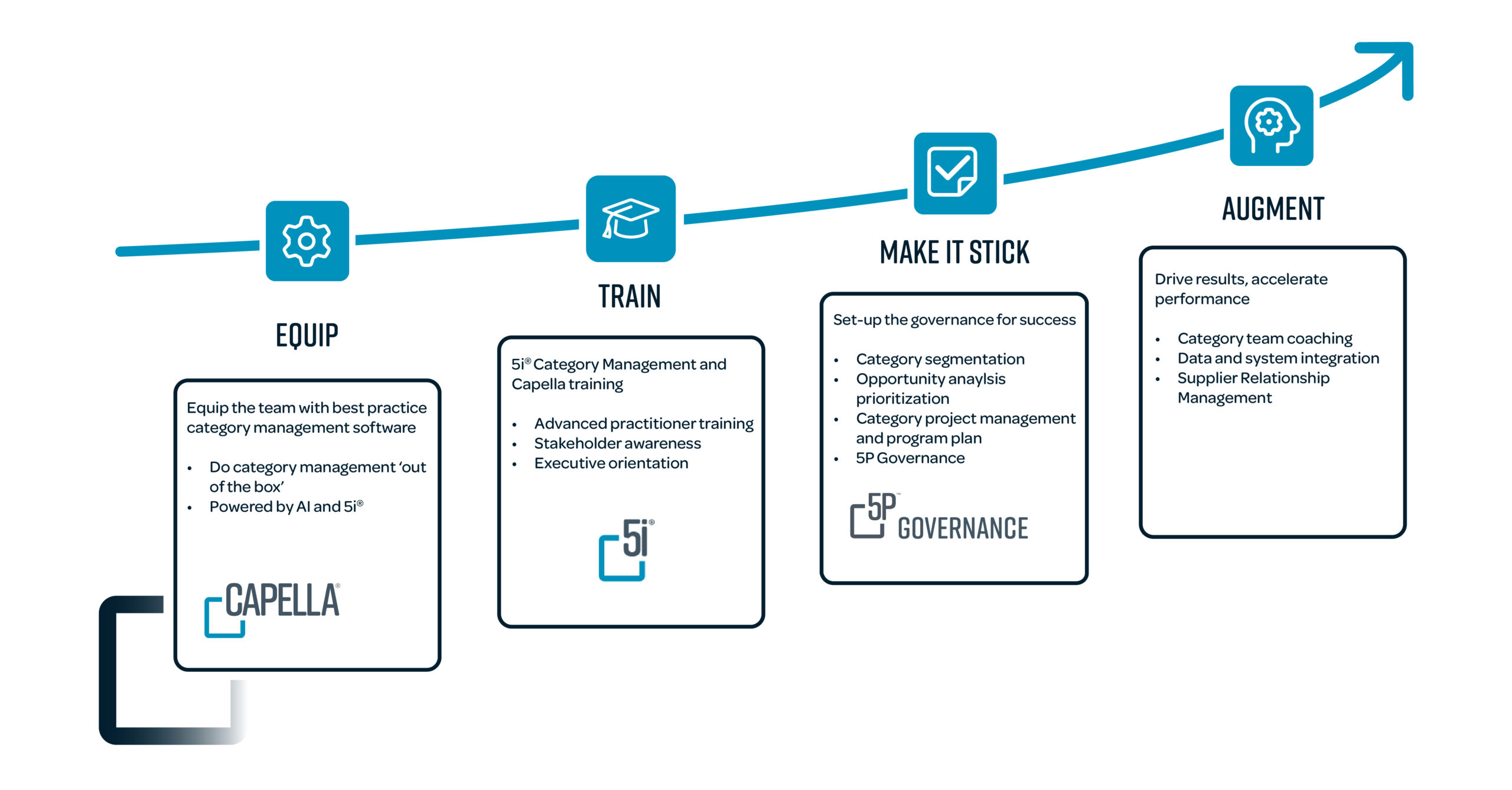
There are two levels to consider here - using the software and practitioner knowledge of category management (necessary to validate what the tool does). Even intuitive tools benefit from some level of training, so check how the vendor will help get your team up to speed. This could include on-site workshops, virtual training sessions or how-to guides. Also ask if there's an extra cost for training services. Advanced practitioner training is equally important and requires a bigger commitment to ensure those who will use the software understand what it must do. Remember, if the software is hard to use or training isn't provided, user adoption will be a challenge.
What is the total cost of ownership, including any hidden fees?
It's essential to go beyond the subscription price quote. Ask the provider to break down all potential costs: implementation fees, integration costs, data migration, additional modules, user licenses, support fees, etc. Sometimes a tool that looks affordable upfront can carry hidden costs that add up later. For instance, if every additional user or every new feature costs extra, you'll want to know that now.
Does the software integrate with our existing systems, and what integrations are available out-of-the-box?
Category management doesn't happen in isolation - it pulls data from sourcing systems, finance systems, market data feeds, and more. So, it's critical that the platform can connect with your other systems. Ask if they have standard integrations (APIs or connectors) for popular ERPs, procurement suites, or BI tools you use. A smooth integration means accurate and validated data updates. In contrast, a lack of integration could leave you back at manual data exports, which defeats the purpose.
How does the software handle our data?
With the growing role of AI in category management tools, data handling is a critical area of due diligence. Ask how your data is stored, processed, and protected. Is it separated from other clients' data? Does the AI model use external or only internal data sources? Where is your data hosted, and can you choose a jurisdiction that meets your compliance requirements? Capella, for example, ensures its AI is 'walled-gardened' using only your data and Capella's own content. Organizations should prioritize vendors that demonstrate this level of transparency and control.
These questions will help you peel back the sales pitch and see how the software will actually perform in your environment. By asking the right questions, you'll feel confident that you've covered all bases before making your investment.
Making the Right Choice for Your Category Strategy
The decision you make now will influence your procurement performance for years to come, so let's recap the key considerations that will guide you to success.
First, always remember the ultimate goal: leveraging technology to enhance a structured, strategic approach. The ROI of category management software comes from smarter processes and better decisions, not from the tool alone. A platform can bring efficiency and data insights, but it's most powerful when supporting a well-defined category management strategy. This is why a built-in structured process is such a differentiator. Solutions that incorporate a proven methodology (like the 5i® methodology we discussed) help ensure your team follows best practices every time. They serve as a digital coach, guiding even junior team members through the strategic steps. In turn, this built-in structure supports internal training and upskilling - your people learn by doing, within the safe rails of the software's workflow. Especially for growing or geographically distributed teams, having that consistent process in the tool means everyone approaches category planning with the same rigour and completeness.
At the same time, keep in mind that success doesn't come from AI magic alone. As we highlighted earlier, tools and AI analytics are incredibly helpful, but strategy starts with people. The best outcomes happen when you combine the efficiency of software with the creativity and judgement of your team. So, when evaluating solutions, favour those that are positioned as enablers for procurement professionals, not replacements.
A good platform will augment your team's abilities - think of it as giving them superpowers like instant data crunching and knowledge of best practices - while still letting humans steer the ship. You'll want your software to encourage strategic thinking (for example, by prompting users with questions or analysis at each stage) rather than doing something opaque in the background with no human input. The right choice will give you confidence and clarity, not a black box.
Another factor in making the right choice is aligning the software with your organization's maturity and specific needs. It's easy to be wowed by a long list of features, but what matters is how well those features solve your challenges. During your evaluation, map the tool's strengths to the objectives you identified. If you have a less mature procurement function, maybe ease of use and guidance are most important to get teams up the learning curve. If you're more advanced, perhaps integration and analytics muscle are the priorities. The right category management platform will feel almost tailor-made for your scenario. It should address your pain points out of the box, or with minimal tweaking. Don't settle for a generic solution that doesn't resonate with your strategy.
Finally, as you come to a decision, think long-term partnership. Ideally, whichever software you choose will be a partner in your category strategy evolution. That means the vendor's vision and roadmap should align with yours. How are they innovating? Do they embrace new technologies (many are now integrating with large language models and advanced AI, for instance) and evolving their product? You want a platform that will keep you at the cutting edge of category management for years to come, not one that will stagnate.
Essentially, making the right choice comes down to a mix of strategy and trust. Strategically, you need a tool that elevates your category management to the next level - one that solves your current problems and positions you for future gains. On the trust side, you should feel that the platform and its provider will support you every step of the way, from implementation to execution, to continuous improvement. If you find a solution that checks those boxes, you're well on your way to creating smarter, more resilient category strategies.
Next Steps: We invite you to take a closer look at Capella - the guided category strategy creator®, designed with all the principles we've discussed in mind. Capella is powered by the 5i® methodology by Positive Purchasing and supported by AI, to help procurement teams at any skill level develop agile, winning strategies and drive tangible results. Of course, the proof is in the doing - so consider reaching out for a demo.
Ultimately, whether you choose Capella or another solution, the goal is the same: to equip your organization with the category management tools it needs to turn procurement into a source of competitive advantage.
Written by Jonathan O'Brien, leading procurement expert and CEO of Positive Purchasing Ltd. Jonathan works with global blue-chip organizations to help transform their procurement capability.